
Comparing Wordle, Quordle, and Octordle: Which Is Best for Brain Training?
In the golden age of bite-sized digital games, few trends have exploded quite like the rise of daily word puzzles. From the first addictive Wordle grids shared across Twitter to the hardcore labyrinth that is Octordle, word games have evolved into a cultural phenomenon.
But beyond the buzz and the bragging rights, a serious question arises for the cognitively curious: Which of these games—Wordle, Quordle, or Octordle—is best for brain training?
Inspired by the Immaculate Grid and designed specifically for NHL fans, Puckdoku blends trivia with logic, making every game a test of both memory and hockey IQ.
Whether you’re a casual fan looking to improve, a die-hard stat junkie, or someone who just solved three rounds of online pokies I before switching tabs, mastering Puckdoku requires more than just knowing household names—it takes strategy, creativity, and a few insider tricks.
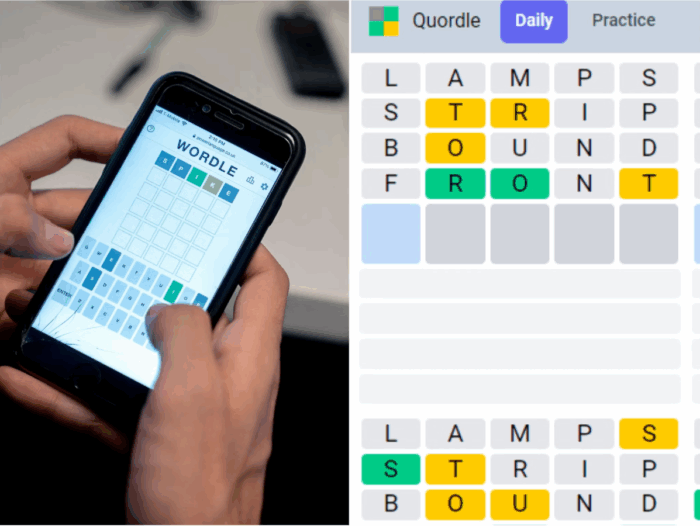
The Science of Brain Training and Word Puzzles
Before diving into game comparisons, let’s establish the framework. Brain training involves activities designed to improve mental functioning, such as:
- Memory retention
- Focus and attention
- Problem-solving speed
- Cognitive flexibility
- Verbal fluency
Word games are especially potent because they combine several of these elements into a single, digestible challenge.
According to numerous cognitive science studies, engaging in puzzles regularly can:
- Strengthen neural connections
- Delay cognitive decline
- Improve verbal reasoning
- Boost working memory and executive function
So where do Wordle, Quordle, and Octordle stand on the brain-training spectrum?
Wordle: The Gateway Game
Overview:
- One five-letter word
- Six guesses
- Clues given after each guess (green = correct letter/position, yellow = correct letter/wrong position)
Cognitive Skills Engaged:
- Pattern recognition: Spotting letter placement feedback and adapting
- Vocabulary recall: Recalling valid five-letter words quickly
- Logical deduction: Narrowing possibilities with limited information
- Working memory: Holding and updating possible combinations in your head
Brain Training Highlights:
Wordle shines in its simplicity. It’s the perfect starter puzzle because:
- It builds daily habit strength.
- It offers just enough challenge to activate prefrontal decision-making without overwhelming players.
- It encourages consistent vocabulary engagement without fatigue.
Weaknesses:
For serious brain training, Wordle lacks:
- Depth of multitasking (only one word)
- Higher-level reasoning chains (only six steps)
- Cumulative memory stress (you rarely need to track a matrix of options)
Verdict:
Best for beginners or warm-up sessions. Think of Wordle as your daily sudoku—it gets the engine running.
Quordle: The Multitasking Mind Bender
Overview:
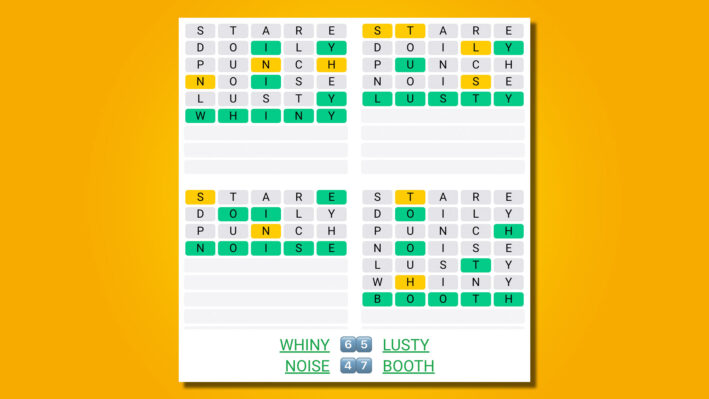
- Four five-letter words
- Nine guesses
- One guess applies to all four grids simultaneously
- Each grid gives its own feedback
Cognitive Skills Engaged:
- Parallel processing: Interpreting multiple sets of feedback from one input
- Error correction: Managing clues across several boards to refine future guesses
- Vocabulary expansion: Greater demand for word variety
- Strategic planning: Must balance solving easier words early to aid the harder ones
Brain Training Highlights:
Quordle introduces complexity. By splitting attention across four words, it taxes your:
- Working memory to juggle multiple partially solved puzzles
- Executive functioning to prioritise which board to crack first
- Cognitive flexibility to switch contexts based on each puzzle’s progress
In many ways, Quordle is the perfect bridge between casual and intensive brain exercise.
Weaknesses:
- Time pressure can increase stress rather than boost performance
- Overreliance on luck with early guesses can derail your strategy
Verdict:
Best for intermediate brain training. Quordle builds mental stamina and multitasking skill—ideal for players ready to stretch their cognitive comfort zone.
Octordle: The Ultimate Cognitive Marathon
Overview:
- Eight five-letter words
- Thirteen guesses
- One guess applies to all eight grids
- Each board reveals its own feedback
Cognitive Skills Engaged:
- Mental endurance: Managing attention across eight concurrent problems
- Selective attention: Ignoring solved boards to focus on unsolved ones
- Advanced deduction: Using information from earlier grids to inform tougher ones
- Complex memory layering: Tracking patterns across boards, filtering irrelevant info
Brain Training Highlights:
Octordle is not for the faint-hearted. It is:
- A true test of short-term memory, asking players to juggle dozens of letters and positions
- A verbal reasoning gauntlet, demanding linguistic dexterity
- A strategic puzzle, where each guess is a risk spread across multiple fronts
For dedicated solvers, it becomes more than a game. It’s cognitive cross-training—part logic, part language, part endurance.
Weaknesses:
- Fatigue factor: Players may experience cognitive overload
- Steep learning curve: Frustrating for beginners
- Performance anxiety: Missing a single guess early can impact all boards
Verdict:
Best for advanced cognitive training. If Wordle is a brisk jog and Quordle is a workout, Octordle is your marathon.
Side-by-Side Comparison
| Feature | Wordle | Quordle | Octordle |
|---|---|---|---|
| Total Words | 1 | 4 | 8 |
| Total Guesses | 6 | 9 | 13 |
| Difficulty | ★☆☆☆☆ | ★★★☆☆ | ★★★★★ |
| Brain Training Focus | Vocabulary recall, deduction | Multitasking, pattern tracking | Executive function, memory layering |
| Best For | Beginners, daily warm-ups | Intermediate solvers | Advanced players, serious cognitive work |
| Time Commitment | 2–5 minutes | 5–10 minutes | 10–20 minutes |
| Replay Value | High (fast, social) | Medium | Medium-High (for those who love a challenge) |
Which Game Builds the Most Cognitive Strength?
If we’re measuring pure brain training value, Octordle offers the most comprehensive cognitive exercise. It taxes your memory, language skills, planning, and pattern matching in a way that few casual games do.
But that doesn’t make the others obsolete.
- Wordle is perfect for habit formation, stress-free language exposure, and quick brain priming.
- Quordle is the sweet spot—where your brain gets tested without being overwhelmed.
- Octordle is the deep-end challenge, ideal for those wanting sustained mental stimulation.
Think of it like a fitness progression:
- Wordle = Stretching + Warm-Up
- Quordle = Strength Training
- Octordle = CrossFit for Your Cortex
Can You Combine All Three for Maximum Brain Benefit?
Absolutely.
Try This Routine:
- Start with Wordle in the morning: Wake your brain up.
- Play Quordle after lunch: Improve multitasking and keep alertness high.
- Attempt Octordle in the evening or on weekends: Treat it like a mental gym session.
Just like physical training, mental variety matters. Mixing formats builds different cognitive “muscles.”
The Role of Fun in Brain Training
Cognitive science has proven that engagement increases retention. If a task feels like a chore, your brain zones out. If it feels like a game—even better, a social game—it lights up.
This is why Wordle went viral.
It’s simple, shareable, and satisfying. The dopamine kick from solving a word reinforces the habit. Quordle and Octordle retain that fun but reward deeper commitment.
If you’re serious about brain training, make sure the process remains enjoyable. Otherwise, it’s just another spreadsheet.
Final Verdict: Which Is Best?
If you want the TL;DR answer—Octordle provides the most intense cognitive workout.
But let’s reframe the question from “Which is best?” to “Which is best for you?”
- New to word games? Start with Wordle.
- Looking to elevate your thinking? Move on to Quordle.
- Ready to test your limits? Dive into Octordle.
Each puzzle serves a purpose. And when played consistently, all three can enrich your language, sharpen your thinking, and inject joy into your daily routine.
So, rather than choosing one—why not play them all?