
The Psychology of High Scores: Why We Are Hardwired to Love Competitive Play.
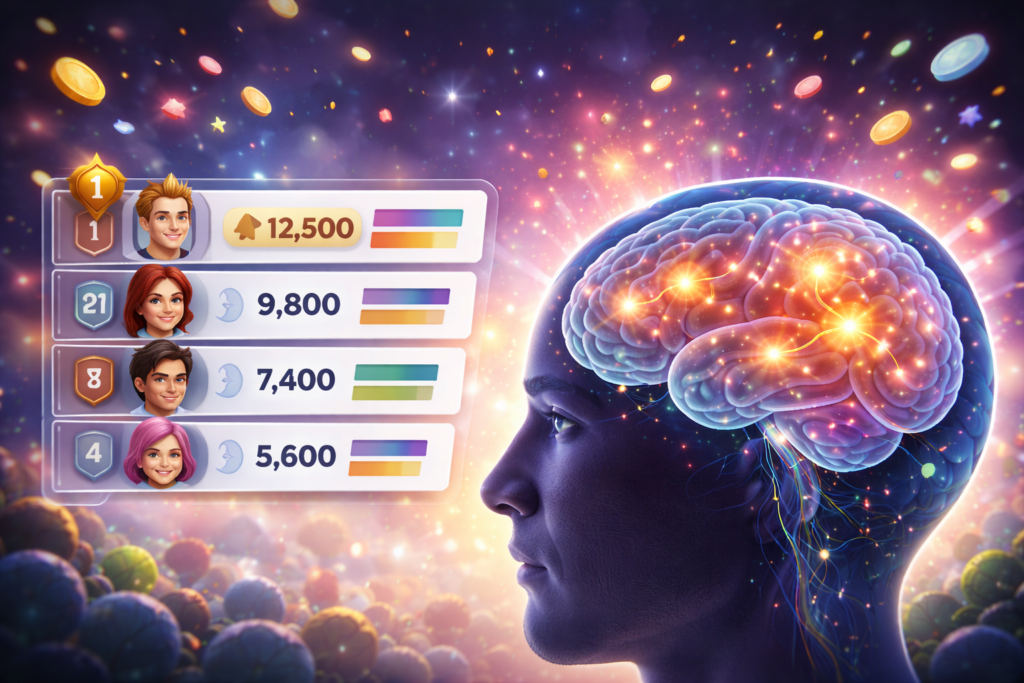
People compete. They always have. On a field, across a chessboard, inside an app, it doesn’t really matter. The urge to edge past someone else, to move up a ranking, to see your name a little higher on a list, runs deep.
Online gaming platforms, including Vegastars casino, don’t create that instinct. They organize it. Leaderboards, tier systems, achievement badges, they give structure to something that already exists.
From an expert view, after spending years examining reward loops, engagement models, and competitive frameworks across digital casinos and broader gaming ecosystems, it is clear.
When placing platform analytics next to behavioral psychology research, certain patterns repeat.
Competitive mechanics tend to extend session time, increase return frequency, and sharpen focus. Not by accident, but because they align with familiar motivational triggers.
Competitive play is not accidental. It reflects evolutionary instincts, neurological reward systems, and structured feedback mechanisms that shape human motivation.
Evolutionary Roots of Competition
From an evolutionary psychology standpoint, humans developed competitive traits to secure resources, improve social standing, and increase survival opportunities. Seeking status once had practical value.
Higher standing within a group often meant greater influence, better access to resources, and more stability over time. It wasn’t ego for its own sake; it served a function.
Today, competitive games echo that structure in symbolic form. Instead of territory or food, there are points, ranks, and visible markers of performance.
The resources change, but the internal response can feel familiar. Move up a leaderboard, and the brain reads it as progress within a hierarchy.
Take a simple case: a player enters a weekly slot tournament and watches their position shift from 40 to 15.
The prize may be modest, even symbolic. Still, that visible climb produces a real sense of advancement, close, in psychological terms, to outperforming peers in a traditional competition.
Dopamine and the Reward System
High scores stimulate dopamine release in the brain’s reward circuits. Dopamine does not simply respond to winning. It responds to anticipation and progress. Uncertainty about outcomes intensifies this response.
In leaderboard-style competitions at Vegastars casino, the pull isn’t only about finishing first. Often, it’s the small upward movements that keep players engaged.
A score ticks higher. A new tier gets closer. That steady climb can be more motivating than the final result itself.
Example 2: Take a timed blackjack leaderboard event. A player watches cumulative points build hand after hand.
Each round feeds into the total, creating a rolling sense of anticipation. The reward isn’t just at the end; it’s reinforced along the way.
Social Comparison and Leaderboard Design
According to social comparison theory, individuals measure their standing by looking at those around them. Leaderboards make those distinctions explicit, turning private performance into a visible ranking.
Psychological Mechanisms Behind Leaderboards
- Upward comparison motivates improvement when players see slightly higher ranked competitors.
- Downward comparison reinforces competence when players outperform others.
- Horizontal comparison fosters rivalry among peers of similar skill levels.
- Visible progress markers provide measurable achievement feedback.
- Public ranking systems create accountability and engagement continuity.
Social Comparison Effects in Competitive Play
Importantly, none of this modifies the game’s mathematical framework. What changes is the surrounding context.
Regular gameplay becomes part of a broader achievement model. The following table illustrates that contrast.
| Mechanism | Psychological Impact | Example in Casino Environment |
| Upward Comparison | Encourages skill improvement | Viewing top 10 leaderboard positions |
| Downward Comparison | Builds confidence | Seeing personal rank above average |
| Horizontal Comparison | Sparks friendly rivalry | Competing with similarly ranked players |
| Progress Tracking | Reinforces consistency | Personal best history display |
| Visible Ranking | Enhances accountability | Public tournament standings |
Mastery and Skill Development
Competition isn’t the only driver. Mastery pulls just as hard. Clear targets, steady feedback, visible progress, those elements satisfy the need to feel competent. Even in games built on chance, players often look for ways to refine their approach.
A blackjack player following basic strategy, for example, may concentrate on cutting down decision errors.
The cards remain unpredictable. The process doesn’t. And improving that process can be motivating on its own.
On platforms like Vegastars casino, tournaments and point-based challenges add another layer. Players chase rewards, yes, but they also track personal progress within the structure of the game.
Gambling Advisory Notice
Competitive features can boost engagement, but the underlying financial risk remains unchanged. Casino games still operate on fixed probabilities. Leaderboards and rankings do not reduce house edge or shift long-term outcomes.
What they can do, however, is heighten emotional intensity, and that may influence how individuals approach their bets.
Players should remain aware that outcomes are determined by probability and variance. Competitive play should be approached with clear bankroll limits and disciplined decision-making.
Competitive Play in Modern Online Casinos
Competitive design elements are now integrated across many digital gaming platforms. Vegastars casino uses tournaments, ranking ladders, and visible achievement markers that reflect well-known behavioral patterns.
None of these promises profit. What it does is add structure, progress you can see, and comparison you can measure.
Brand aside, the psychology doesn’t change. People track status. They notice improvement. They compare. Competitive layers turn isolated outcomes into something that feels like forward movement.